Geshe Langri Tangpa
The man who wrote the Eight Verses laughed exactly three times in his life — and his students kept a record of what made him do it.
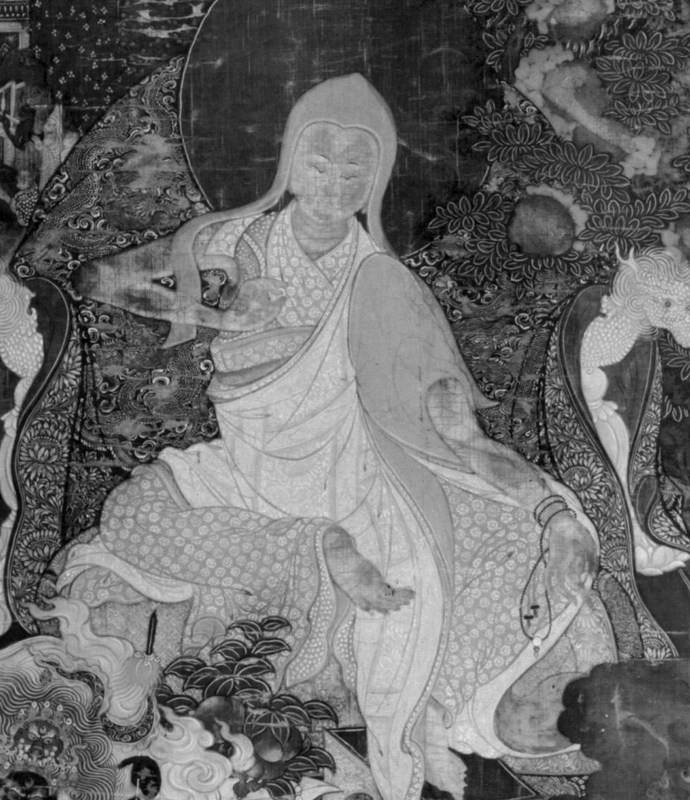
At a glance
- Born
- 1054, in Phenpo (འཕན་པོ), central Tibet
- Birth name
- རྡོ་རྗེ་སེང་གེ — Dorje Senge, "Vajra Lion"
- Known as
- གླང་རི་ཐང་པ — Langri Tangpa, "the man from Langtang"
- School
- Kadampa (བཀའ་གདམས)
- Teacher
- Geshe Potowa Rinchen Sal
- Founded
- Langtang Monastery
- Students
- Said to have numbered over 2,000
- Died
- 1123, aged 69
The name is a place
He was born Dorje Senge — "Vajra Lion" — but almost nobody calls him that. Langri Tangpa isn't a name at all; it means "the one from Langtang," the valley where he founded his monastery. Tibetan does this constantly: a teacher becomes known by where he taught, the way we might say "the Oxford don."
Geshe (དགེ་བཤེས) is his title — roughly "spiritual friend," and in the Kadampa tradition it carried the sense of a teacher who lived what he taught rather than merely lecturing on it.
Where he sits in the lineage
He belongs to the Kadampa, the school founded on the teachings of the Indian master Atisha, who came to Tibet in 1042. The chain runs short and direct:
He and Geshe Sharawa were known as the sun-like and moon-like disciples of Potowa — a Tibetan way of saying the two brightest in the room.
That last link matters. His student Chekawa wrote Seven Points of Mind Training, the other pillar of the lojong literature. The Eight Verses didn't end with him; they started something.
The sour-faced geshe
He was nicknamed "Sour-Faced Langri Tangpa." He rarely smiled and reportedly spent much of his time weeping — not from personal misery, but because he could not stop thinking about the suffering of others.
When a student asked him to be less gloomy, he answered:"Thinking of all the sufferings of samsara, and how there is not an iota of happiness in the three realms — how could I possibly smile?"
Tradition holds that he laughed only three times:
When three mice stole a piece of turquoise from a mandala offering — one lying on its back holding the stone on its belly while the other two dragged it away by the feet.
When he heard of a man due to be executed at dawn who spent his final night mending his shoes.
When he watched someone struggling to lever an enormous rock out of the ground — which turned out to be the head of a sleeping ogre.
These aren't jokes so much as scenes of absurd, stubborn effort. A man polishing shoes he'll never wear again. Mice executing a heist. It's a particular sense of humour, and it's recognisably the same mind that wrote verse five.
Why eight verses outlived him
The text is tiny — eight verses of four lines each, 224 syllables in total. You can memorise it in an afternoon. That was the point.
The Kadampa tradition valued portable teaching: short enough to carry in your head, specific enough to actually practise. The Eight Verses compress the heart of lojong (བློ་སྦྱོང, "mind training") into something a layperson could recite while walking.
It became one of the most widely known texts in Tibetan Buddhism. The present Dalai Lama has said he recites it daily and has taught on it throughout his life.
A note on the sources
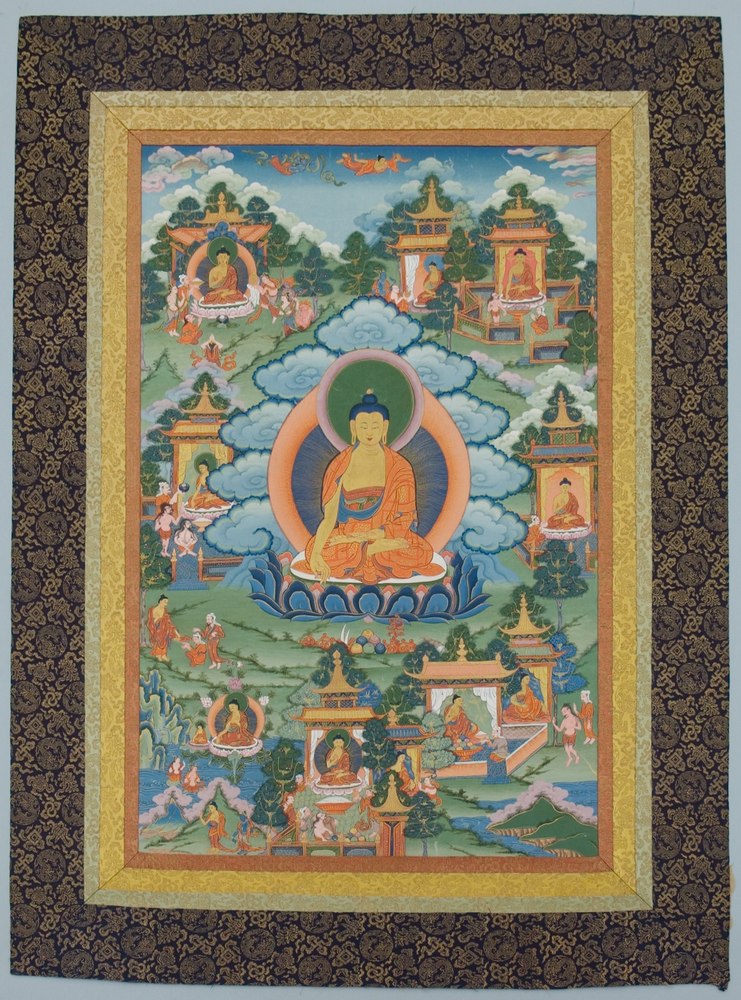
Almost everything known about his life comes from Tibetan biographical tradition recorded generations after his death. The dates (1054–1123), his teacher, his monastery and his authorship are well attested. The three-laughs stories are hagiography — teaching stories told about a saint — and should be read as a portrait of how he was remembered rather than as documentary fact.
That distinction matters, and it's worth holding onto: these stories are true about the tradition's view of him, which is a different kind of true.